GRADUATE CLINICAL CARE ASSOCIATE CERTIFICATION

Buy this course to unlock the videos and materials below.
15 weeks · 261 resources
The transition from a university degree in Anatomy or Physiology into clinical practice requires more than knowledge of the human body. It requires the ability to translate scientific knowledge into safe, compassionate, ethical and patient-centred care. Module 1, Foundations of Clinical Care, provides the foundation for the entire Clinical Care Certification Course. It introduces participants to the healthcare environment, the principles of clinical practice, professional behaviour, patient rights, healthcare teamwork, communication, clinical safety and the defined role of the Clinical Care Associate (CCA).
Module 2: Applied Anatomy and Physiology for Clinical Care builds on the trainee’s existing biomedical knowledge and focuses on applying anatomy and physiology to real patient care. The module bridges the gap between understanding how the body works and recognising how changes in body systems may present in clinical practice.
Module 3 introduces the principles of safe, compassionate and patient-centred bedside care. It helps the Graduate Clinical Care Associate transition from understanding the human body to confidently supporting the whole patient through hygiene, comfort, mobility, nutrition, safety, observation and basic nursing care. The central focus is: To care with compassion, observe with attention, practise within competence and escalate concerns promptly.
This module introduces the Graduate Clinical Care Associate to the essential skills of observing, assessing, measuring and documenting a patient’s basic physiological status. Students will learn to accurately obtain vital signs, recognise normal and abnormal findings, identify early signs of clinical deterioration, and promptly escalate concerns to the appropriate healthcare professional. The emphasis is on developing clinical observation, accuracy, patient safety and sound judgement within the GCCA’s scope of practice.
This module equips the Graduate Clinical Care Associate with the knowledge and practical skills required to prevent, recognise and control the spread of infection within healthcare settings. Students will learn standard precautions, hand hygiene, appropriate use of PPE, aseptic technique, sharps safety, healthcare-associated infections, waste management and prevention of occupational exposure. The focus is on protecting patients, healthcare workers and the wider community through safe clinical practice.
This module introduces the Graduate Clinical Care Associate to the principles of pharmacology, safe medication use and medication administration. Students will learn how medicines act in the body, common drug classes, routes of administration, dosage calculations, medication safety principles, adverse drug reactions and proper documentation. Emphasis is placed on safe, accurate and responsible medication practice within the GCCA’s defined scope of practice and under appropriate clinical supervision.
This module equips the Graduate Clinical Care Associate with essential hands-on clinical procedure skills required for safe patient care. Students will learn principles and techniques of phlebotomy, specimen collection and handling, basic wound care, catheter care, blood glucose monitoring and other routine clinical procedures. Emphasis is placed on infection prevention, patient safety, accurate technique, proper documentation and recognition of complications, with all procedures performed within the GCCA’s defined scope and level of supervision.
This module introduces the Graduate Clinical Care Associate to the principles of fluid and electrolyte balance and safe IV therapy. Students will learn to monitor fluid status, recognise dehydration and fluid overload, understand common electrolytes and IV fluids, calculate infusion rates, monitor IV sites, identify complications and escalate abnormalities promptly. Emphasis is placed on patient safety, accurate monitoring, documentation and supervised practice within the GCCA’s scope of care.
This module prepares the Graduate Clinical Care Associate to provide safe, compassionate and effective supportive care to patients with common medical and surgical conditions. Students will develop skills in patient observation, basic supportive care, postoperative monitoring, wound and catheter care, recognition of complications, and early identification and escalation of clinical deterioration. The focus is on safe practice, teamwork, clinical observation and working within the GCCA’s defined scope of practice.
This module equips the Graduate Clinical Care Associate with the knowledge and skills to recognise, assess and respond appropriately to clinical emergencies. Students will learn basic life support, ABCDE assessment, recognition of shock, respiratory distress, cardiac arrest, seizures, stroke, severe bleeding, anaphylaxis and other acute conditions, with emphasis on rapid escalation, patient safety, effective communication, teamwork and working strictly within the GCCA’s scope of practice.
This module introduces the Graduate Clinical Care Associate to the principles of nutrition, hydration, elimination, hygiene and basic patient support. Students will learn to assist patients with feeding, fluid intake, toileting and personal care, monitor intake and output, recognise malnutrition, dehydration, aspiration risk and abnormal urinary or bowel patterns, and escalate concerning findings appropriately. Emphasis is placed on patient dignity, safety, infection prevention, accurate documentation and working within the GCCA’s scope of practice.
This module introduces the Graduate Clinical Care Associate to the psychological, emotional and social dimensions of patient care. Students will learn therapeutic communication, active listening, recognition of common mental health presentations, support for distressed and vulnerable patients, identification of suicide and safety risks, trauma-informed care, appropriate de-escalation and effective referral and escalation. Emphasis is placed on compassion, dignity, confidentiality, professional boundaries, patient safety and working within the GCCA’s defined scope of practice.
This module introduces the Graduate Clinical Care Associate to the principles of safe and compassionate care for pregnant women, postpartum mothers, newborns, children, older adults and other vulnerable patients. Students will learn to provide supportive care, monitor vital signs, recognise maternal and paediatric danger signs, identify clinical deterioration, support nutrition and hygiene, prevent infection and falls, and escalate concerns promptly. Emphasis is placed on patient safety, dignity, safeguarding, age-appropriate communication, accurate documentation and working strictly within the GCCA’s defined scope of practice.
This module equips the Graduate Clinical Care Associate with the essential communication, documentation and ethical skills required for safe and professional clinical practice. Students will learn effective patient-centred communication, active listening, clinical handover, SBAR, accurate documentation, confidentiality, informed consent, professional boundaries, safeguarding and appropriate incident reporting. Emphasis is placed on clear communication, accurate documentation, patient dignity, confidentiality, ethical decision-making, accountability and working within the GCCA’s defined scope of practice.
This module introduces the Graduate Clinical Care Associate to the principles of community health, disease prevention and health promotion. Students will learn to identify common community health risks, promote healthy lifestyles, support immunisation and infection-prevention activities, participate in health education and screening programmes, recognise vulnerable individuals and facilitate appropriate referral. Emphasis is placed on prevention, early detection, health education, community participation, confidentiality, cultural sensitivity and working within the GCCA’s defined scope of practice.
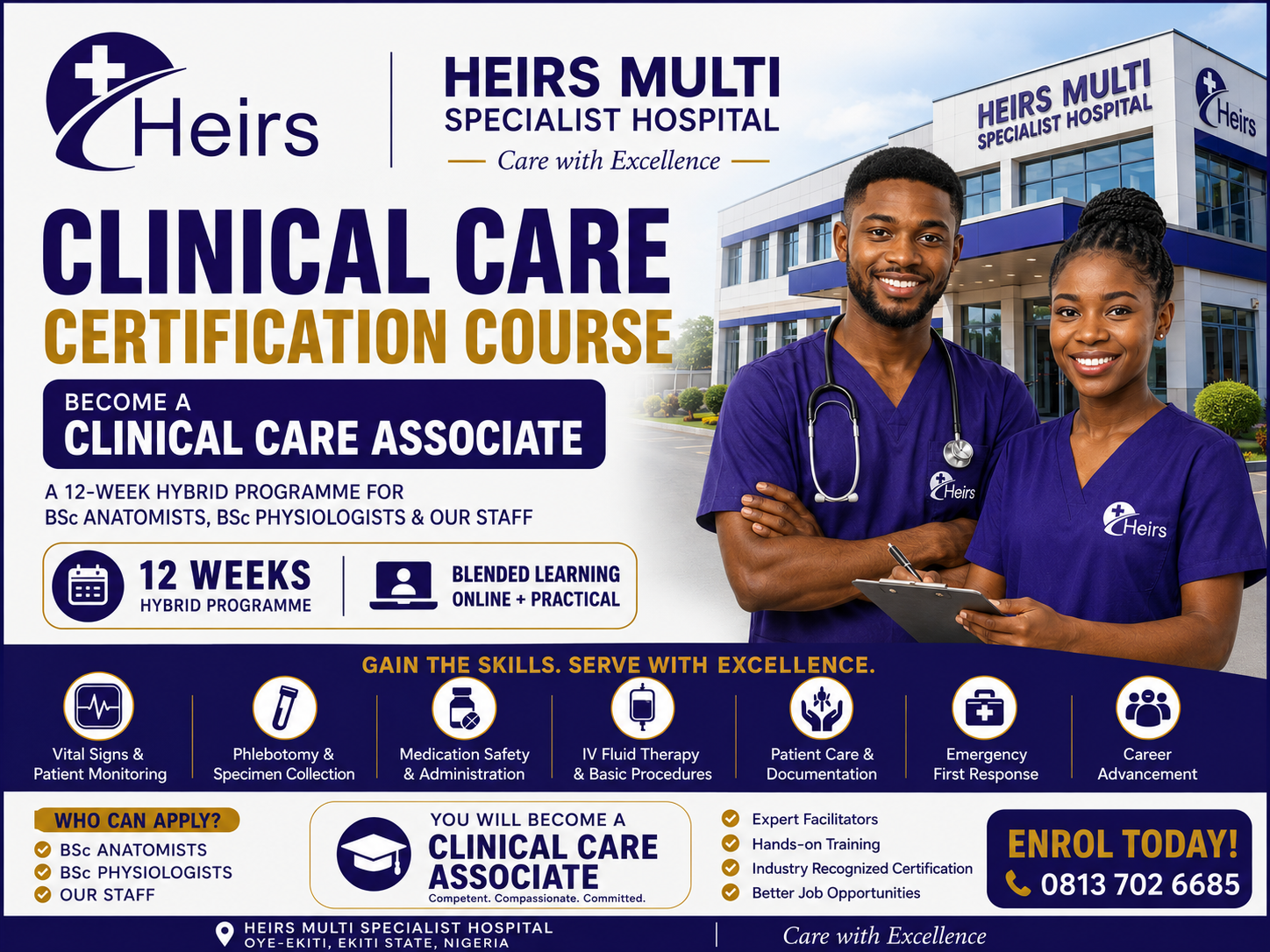
The programme combines online theoretical learning, practical skills training and supervised clinical exposure. Participants will develop competencies in vital signs and patient monitoring, basic patient care, phlebotomy and specimen collection, pharmacology and medication safety, IV fluid therapy, infection prevention and control, emergency and first-response care, clinical documentation, communication, fluid and electrolyte management, and other essential aspects of safe patient support.
The course is designed around competency, patient safety, professionalism and multidisciplinary teamwork, enabling participants to contribute effectively to clinical care within a clearly defined scope of practice and under appropriate professional supervision.
At the end of the programme, successful participants will be awarded the Graduate Certificate in Clinical Care and Patient Support and will be prepared to function as Graduate Clinical Care Associates (GCCA).
Based on 1 rating
Detailed, straighforward and highly applicable.
A short registration is required before you can buy this course.
Have a coupon code?
- 15 weeks of content
- 261 video resources
- 17 course materials
- Certificate of completion
- 6 months access
GRADUATE CLINICAL CARE ASSOCIATE CERTIFICATION