CERTIFIED HEALTHCARE ASSISTANT

Buy this course to unlock the videos and materials below.
12 weeks · 275 resources
Week 1 introduces the professional foundations of healthcare assistance. Participants will explore the role of the healthcare assistant, professional practice, patient-centred care, responsibility, and the standards required to provide safe, compassionate, and respectful care
Module 2 introduces Infection Prevention and Control (IPC), equipping participants with essential knowledge and skills to prevent the spread of infection in healthcare settings. It focuses on the chain of infection, standard precautions, hand hygiene, PPE, environmental cleaning, waste management, sharps safety, and prevention of healthcare-associated infections.
Module 3 focuses on the communication and documentation skills that enable healthcare assistants to provide safe, respectful, effective and patient-centred care. Students will learn how to communicate clearly with patients, relatives and healthcare professionals, use verbal and non-verbal communication appropriately, practise active and therapeutic listening, and manage difficult conversations professionally. The module also introduces essential healthcare documentation, including observation charts, fluid balance charts, progress notes, incident reports and clinical handovers using the SBAR framework. Students will understand the importance of accurate, timely, objective and confidential documentation in maintaining continuity of care and patient safety. Customer care is another important component, emphasizing courtesy, compassion, responsiveness, professionalism and respectful management of complaints. By the end of the module, students should be able to communicate confidently, document care accurately, contribute effectively to handovers, and provide a positive experience for patients and their families.
Module 4 introduces students to the essential skills of observing, measuring, recording and reporting changes in a patient's condition. Students will learn how to accurately assess vital signs, monitor pain, recognise early signs of deterioration, and identify important warning signs associated with conditions such as shock and sepsis. The module also emphasises accurate documentation, timely communication and appropriate escalation, helping Healthcare Assistants contribute effectively to safe, responsive and person-centred patient care.
Module 5 focuses on personal hygiene, care of bedridden patients, and pressure-ulcer prevention. It equips Healthcare Assistants with the knowledge and skills to support patients with daily activities while preserving their comfort, dignity, privacy, independence, and wellbeing. The module also explores the effects of prolonged immobility, safe positioning and turning, skin assessment, pressure-area care, oral hygiene, toileting, grooming, and the promotion of adequate sleep and rest.
Module 6 focuses on the vital role of nutrition and hydration in promoting health, healing and recovery. It equips Healthcare Assistants with essential knowledge and skills to support patients with eating and drinking while maintaining their safety, dignity and independence. The module covers basic nutrition, balanced diets, hydration and fluid balance, feeding assistance, aspiration prevention, and accurate monitoring of food, fluid and output. Students will also learn to recognize and report nutritional and hydration concerns, particularly in vulnerable patients.
Module 7 focuses on helping patients move safely, maintain independence and participate in their recovery. Students will learn the principles of safe moving and handling, patient transfers, mobility assistance, fall prevention and basic rehabilitation support. The module emphasizes risk assessment, correct use of mobility aids, teamwork, patient dignity, prevention of injury, and encouraging patients to do as much as they can safely do for themselves.
Week 8 focuses on providing safe, compassionate and person-centred care for older adults. Students will explore the ageing process and understand the physical, psychological and social changes that may occur in later life. The module also introduces common geriatric conditions, dementia care, strategies for promoting independence and the fundamental principles of end-of-life care. The emphasis throughout the week is on dignity, respect, patience, safety and independence. Healthcare Assistants will learn how to support older adults not simply as patients, but as individuals with unique histories, preferences, values, abilities and needs. By the end of the week, students should appreciate that excellent geriatric care means protecting dignity, recognising changes in health, encouraging independence and providing compassionate support at every stage of later life.
Giving Every Baby the Best Start in Life Module 9 focuses on the safe, clean and compassionate care of newborns and infants. Students will learn the essential needs of the newborn, including maintaining warmth, basic hygiene, umbilical cord care, safe feeding and appropriate comfort. The module also emphasizes breastfeeding support, the importance of colostrum, infection prevention, safe sleep practices and immunization awareness. A major focus is learning to recognize important newborn danger signs such as difficulty breathing, poor feeding, abnormal temperature, jaundice, lethargy and unusual crying, and knowing when to promptly report concerns to the appropriate healthcare professional. The overall goal is to help Healthcare Assistants provide gentle, respectful and safe care while protecting newborns from infection, injury and preventable complications.
Module 10 introduces students to the safe and responsible use of medicines in healthcare practice. It focuses on understanding common medication groups, medication safety principles, basic oral medication administration, allergy awareness and accurate documentation. Students will learn the importance of checking the right patient, right medication, right dose, right route and right time, while also recognizing potential adverse reactions and medication errors. The module emphasizes that Healthcare Assistants must work strictly within their training, authorization, scope of practice and facility policies. By the end of the module, students should understand how careful medication support, effective communication, accurate documentation and prompt reporting of concerns contribute to safe, professional and person-centred patient care.
Module 11 focuses on basic wound care, catheter care and specimen collection as important components of safe patient care. Students will learn how to support wound healing, observe wounds for concerning changes, provide appropriate catheter-care support, and safely collect, label and handle common clinical specimens. The module emphasizes infection prevention, patient dignity, accurate observation, proper documentation and prompt reporting of abnormalities. Students will also learn the importance of working within their training, competence, authorization and facility policies when performing these tasks. The overall goal is to equip Healthcare Assistants to support healing, prevent avoidable complications and contribute effectively to safe, compassionate and person-centred care.
Module 12 focuses on the essential knowledge and skills Healthcare Assistants need to respond safely to emergencies, support patients experiencing mental health difficulties, and develop professionally for effective healthcare practice. Students will learn how to recognize common emergencies, respond appropriately within their level of training and authority, communicate effectively during crisis situations, and promptly report and document significant events. The module also introduces mental health awareness, therapeutic communication, professional boundaries, safeguarding, confidentiality, and the importance of recognizing and responding appropriately to concerns about self-harm or suicide. The module concludes with professional development, teamwork, reflective practice, accountability and preparation for clinical practice, helping students integrate the knowledge and skills gained throughout the programme. The overall goal is to prepare Healthcare Assistants to remain safe, calm, compassionate, competent and professional when caring for patients in both routine and emergency situations.
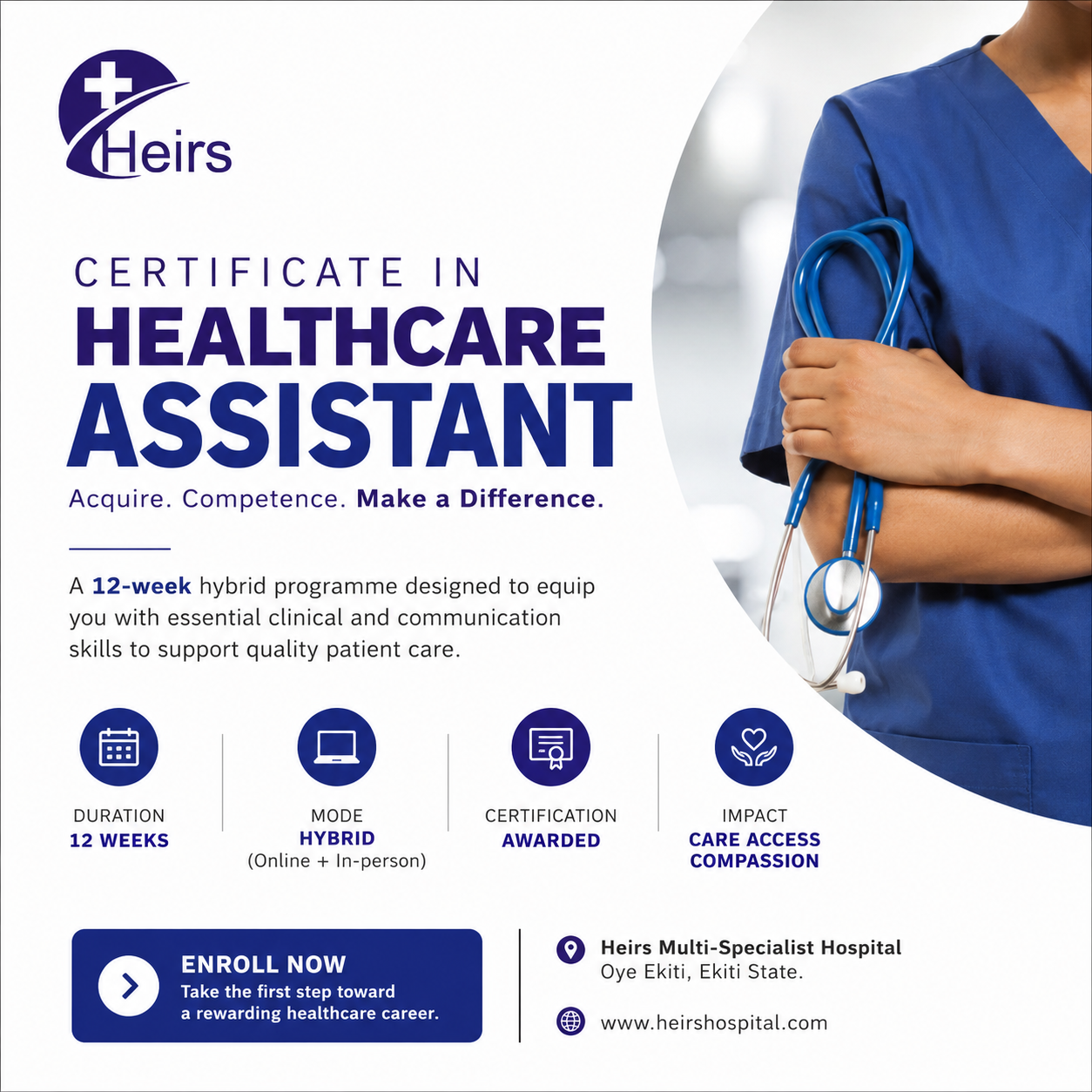
The Certificate in Healthcare Assistance Programme is a structured training programme designed to equip participants with the foundational knowledge, practical skills, professional attitudes, and safety awareness required to function effectively as healthcare assistants within appropriate healthcare settings.
The programme takes a patient-centred approach, emphasizing not only the practical aspects of assisting with patient care but also communication, dignity, compassion, infection prevention, observation, safety, documentation, and professional responsibility.
Across 12 weeks, participants progress from the professional foundations of healthcare assistance through essential areas of direct patient support, including infection prevention, communication, patient monitoring, personal hygiene, nutrition, mobility, geriatric care, newborn care, medication support, wound and catheter care, emergency response, and mental health awareness.
What the Course Covers
Week 1 – Professional Foundations of Healthcare Assistance
Introduces healthcare assistance, professional practice, the role of the healthcare assistant, and the principles that guide safe and responsible patient support.
Week 2 – Infection Prevention
Focuses on infection prevention and control and the practices necessary to protect both patients and healthcare workers.
Week 3 – Communication, Documentation and Excellence in Patient Care
Develops effective communication, appropriate documentation, interpersonal skills, and customer-care principles essential to quality healthcare delivery.
Week 4 – Patient Observation and Monitoring
Teaches participants to observe patients appropriately, monitor changes in condition, and recognize early signs of deterioration that require escalation.
Week 5 – Comfort, Dignity and Skin Integrity
Covers personal hygiene, care of bedridden patients, promotion of comfort and dignity, and prevention of pressure ulcers.
Week 6 – Nutrition, Hydration and Feeding Assistance
Introduces the principles of supporting patients with nutrition, hydration, and safe feeding practices.
Week 7 – Mobility, Rehabilitation and Patient Safety
Addresses safe mobility, rehabilitation support, prevention of avoidable harm, and maintaining patient safety during movement and care.
Week 8 – Compassionate Care of Older Adults
Introduces geriatric care and the specific needs of older adults, emphasizing compassionate, respectful, and appropriate support.
Week 9 – Newborn and Infant Care
Provides foundational knowledge for supporting newborns and infants and promoting their safety and wellbeing.
Week 10 – Medication Safety and Responsible Medication Support
Introduces medication awareness and basic oral medication administration, with emphasis on safety and responsible support within the healthcare assistant's appropriate role.
Week 11 – Wound Care, Catheter Care and Diagnostic Support
Covers basic wound care, catheter care, specimen collection, and supporting selected diagnostic processes.
Week 12 – Emergency Response, Mental Health and Professional Development
Brings the programme together through emergency response, mental health awareness, and preparation for professional practice.
Core Philosophy of the Programme
The programme is built around the theme:
“Developing Competent, Compassionate and Professional Healthcare Assistants for Safe, Person-Centred Care.”
This means the course is not simply about teaching someone how to perform tasks. It is about developing a healthcare assistant who understands the person behind the patient, respects dignity, recognizes changes in health status, communicates appropriately, works safely, understands professional boundaries, and knows when a situation requires escalation to a qualified healthcare professional.
Who the Course Is Designed For
The course is particularly suitable for individuals seeking foundational preparation for healthcare assistant roles, including those interested in:
Hospitals and clinics
Residential and elderly care
Home-based patient support
Community healthcare settings
Newborn and infant support
Patient-care support services
Entry-level healthcare assistance roles
Expected Outcome
By the end of the programme, participants should have developed a foundation in safe patient support, observation, infection prevention, personal care, nutrition, mobility, communication, documentation, basic clinical support, emergency response, and professional conduct.
No reviews yet. Be the first to review this course.
A short registration is required before you can buy this course.
Have a coupon code?
- 12 weeks of content
- 275 video resources
- 12 course materials
- Certificate of completion
- 6 months access
CERTIFIED HEALTHCARE ASSISTANT